Why Protein Stains Must Always Be Treated With Cold Water First
TL;DR
- ·Protein stains (blood, sweat, egg, dairy) are permanently set by heat — denaturation is largely irreversible above 40–60°C
- ·Cold water applied immediately is the most effective first response to any fresh protein stain
- ·Enzyme-based pre-treatments (proteases) break down protein stains but only work in cold to lukewarm water
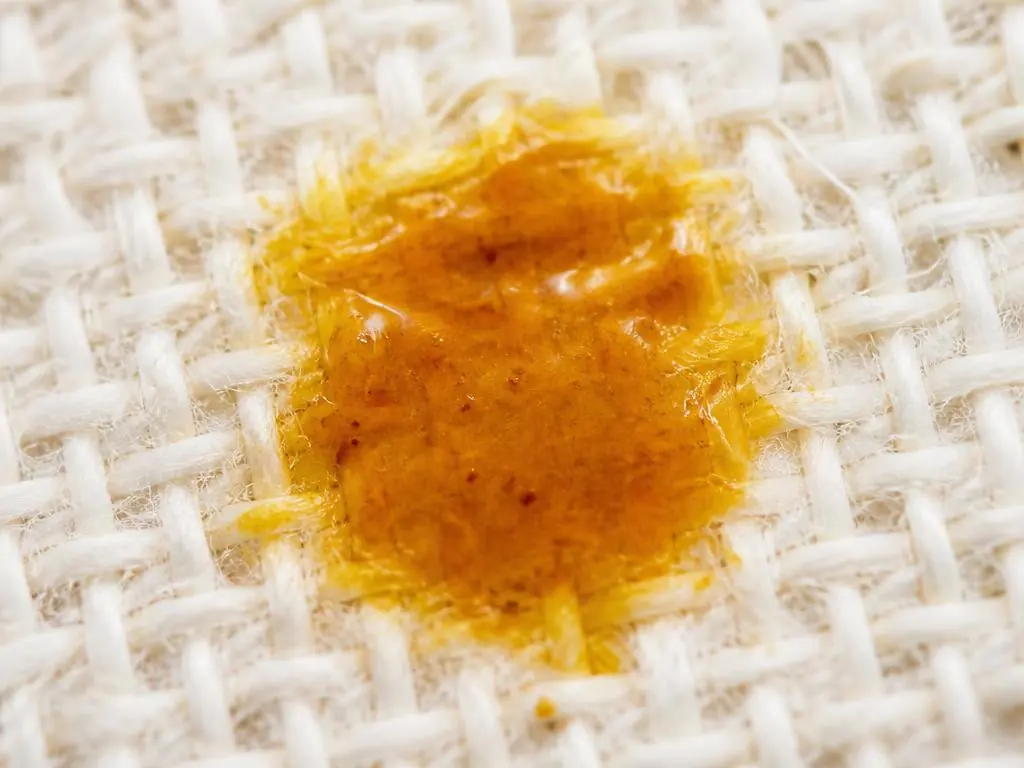
A drop of blood on a white cotton kurta. A sweat stain on a collar. Milk spilled on a child's school uniform. These look like different problems but they belong to the same chemical category — protein stains — and they all share one critical vulnerability: heat sets them permanently. This is not a matter of degree. A protein stain treated with hot water before the protein has been removed is, in most cases, a permanent stain. The chemistry is specific and the threshold is real. Understanding why this happens changes how you respond the moment a protein stain occurs.
The Chemistry of Protein Denaturation
Proteins are long, complex molecules made of amino acid chains folded into specific three-dimensional shapes. In their native state — inside blood, sweat, egg white, dairy — these chains are held in shape by relatively weak molecular bonds. The proteins are soluble, or at least removable, because water and detergent can interact with and dislodge them from fabric fibres at this stage.
Heat breaks these weak bonds. The protein chains unfold — this process is called denaturation — and then re-fold into a new, more compact, chemically bonded structure. This is exactly what happens when you cook an egg. Raw egg white is a translucent liquid; heated egg white is an opaque solid. The protein has denatured. You cannot reverse this.
The same process occurs when blood, sweat, or dairy comes into contact with hot water on fabric. The protein denatures and bonds chemically to the fibre. Detergent cannot break these bonds. The stain is set.
The critical temperature threshold varies by protein type, but for most biological proteins relevant to laundry — haemoglobin in blood, albumin in egg and dairy, the proteins in sweat — denaturation begins at temperatures as low as 40°C and is largely irreversible above 60°C.
This means that a washing machine set to even a moderate warm cycle (40–50°C) can permanently set a protein stain that could have been removed by cold water treatment applied immediately.
Blood Stains — The Most Common Protein Stain Mistake
Blood is haemoglobin — a protein. Fresh blood on fabric can be removed effectively with cold water, applied immediately and generously, by rinsing and gently agitating the fabric until the water runs clear. The protein has not yet fully bonded to the fibre and cold water carries it away.
The most common mistake is placing a blood-stained garment directly into a washing machine, which — unless set to a specific cold cycle — uses water that may be warm enough to denature the haemoglobin. The result is a brown or rust-coloured stain permanently bonded into the fabric.
For blood stains that have already dried — but have not been through a hot wash — cold water soaking combined with an enzyme-based pre-treatment is the most effective approach. Proteases, the enzyme category that breaks down protein chains, are standard components of most biological detergents. They work on protein stains in cold to lukewarm water, breaking the protein into smaller fragments that can be rinsed away.
Above approximately 40°C, the protease enzymes themselves denature and become inactive — which is why enzyme-based treatments must be applied in cold water to be effective.
Sweat Stains — The Slow-Set Problem
Sweat stains are more complex than fresh blood because they involve two distinct problems: the protein component of sweat (primarily albumin and other skin proteins), and the salt and mineral deposits that accumulate alongside it.
The protein component must be treated with cold water and enzyme pre-treatment, as with blood. The mineral deposits — which cause the characteristic yellow staining around collar and armpit areas — respond to different treatment: mild acidic solutions (white vinegar or lemon juice) help dissolve mineral buildup, though these should not be applied to delicate fabrics where acid damage is a risk.
The yellowing of white fabric around collar and armpit areas that many Indian households attribute to inadequate washing is frequently the result of protein and mineral buildup that has been repeatedly set by warm washes over many cycles. Once this buildup is heat-set multiple times, even enzyme treatments have limited effectiveness.
Dairy Stains — Casein and the Heat Problem
Dairy stains — milk, curd, paneer, cream — contain casein, the primary milk protein, along with fat. The fat component responds to surfactant treatment; the protein component follows the same denaturation pattern as blood.
The practical implication: a milk or curd stain should always be rinsed first in cold water to remove the protein, and only then treated with detergent for the fat component. Applying detergent directly to a warm dairy stain — or worse, placing the garment in a warm wash immediately — risks setting the casein while the fat may or may not be fully removed.
A cold water rinse first, followed by a short cool soak with a small amount of liquid detergent, followed by a normal wash at the temperature appropriate for the fabric — this is the correct sequence.
The Indian Kitchen Context
Indian cooking creates a specific protein stain profile that deserves mention. Daal, sambar, curd-based gravies, egg curry, meat dishes — these all carry protein components alongside oil and spice pigments. The combination stain is common and the temptation to apply hot water or hot wash immediately is understandable.
The correct approach for combined protein and oil stains: treat the protein first with cold water, then address the oil component with surfactant pre-treatment. Treating in the reverse order — applying detergent (which works better in warmer conditions) first — risks using warm water that sets the protein before the surfactant has fully emulsified the oil.
When a Protein Stain Has Already Been Heat-Set
The honest answer: a fully heat-set protein stain that has been through a hot wash is extremely difficult to remove completely. Some improvement may be possible through:
- Repeated enzyme soaking in cold water over extended dwell time
- Specialist stain treatments designed for set protein stains
- Professional fabric care with targeted pre-spotting agents
But the expectation should be that a heat-set protein stain on most fabrics will not return to its original appearance. Prevention — cold water, immediately — is the effective strategy.
Key takeaways
- Protein stains (blood, sweat, egg, dairy) are permanently set by heat — denaturation is largely irreversible above 40–60°C
- Cold water applied immediately is the most effective first response to any fresh protein stain
- Enzyme-based pre-treatments (proteases) break down protein stains but only work in cold to lukewarm water
- Indian cooking creates complex stains combining protein, oil, and pigment — treat the protein component first with cold water before addressing the rest
- A protein stain that has already been through a hot wash is very difficult to fully remove — prevention is the correct strategy
This article is for general educational purposes only. It draws on publicly available research cited above. fabwash.com does not provide medical, dermatological, or professional advice. Consult a qualified professional for health or fabric care concerns specific to your situation. fabwash.com is an independent editorial platform founded by Vestido Fabwash Studio, Bengaluru — see our About page for full founding disclosure.
Sources
- International Fabricare Institute — Protein Stain Chemistry and Treatment Protocols, Technical Bulletin Series, 2019
- American Cleaning Institute — Guide to Stain Removal: Protein-Based Stains, 2021
- Journal of Surfactants and Detergents — Protease Enzyme Activity in Laundry Applications: Temperature Dependence, Vol. 20, 2017
- Bureau of Indian Standards IS 14616 — Textile Care Labelling Code, 2000 (reaffirmed 2018)
- Textile Research Journal — Protein Fibre Denaturation Mechanisms in Laundry Conditions, Vol. 88, 2018
Discussion
Comments are moderated. Yours appears once an editor approves it.
Sign in to comment- No comments yet. Be the first to add context.